Choosing the perfect stone for your kitchen floor is more than a design decision—it’s a long-term investment in comfort, durability, and style. With so many options on the market, it can be overwhelming to find the right balance between function and aesthetics. That’s why stone remains a timeless favorite—offering unmatched resilience, natural beauty, and enduring value. In this guide, we walk you through everything you need to know, from the best natural stone types to expert maintenance tips. Read on to discover how Emporium Stone helps you create a kitchen floor that’s built to last and designed to impress.
Why Choose Stone for Your Kitchen Floor?
When it comes to kitchen renovations, flooring plays a pivotal role in both design and daily function. Among all available materials, natural stone stands out as a premium choice that blends practicality with timeless elegance. It’s not just about surface appeal—stone flooring offers lasting performance, heat compatibility, and added home value, making it a smart investment for any modern kitchen.
Key Benefits of Stone Kitchen Flooring:
- Exceptional Durability & Longevity: Stone flooring can withstand heavy foot traffic, accidental spills, and daily wear—making it ideal for high-use areas like kitchens.
- Aesthetic Appeal & Natural Beauty: Each stone slab is one-of-a-kind, offering rich textures, organic colors, and an authentic charm that elevates your kitchen’s overall design.
- Heat Resistance & Underfloor Heating Compatibility: Natural stone retains and conducts heat well, making it perfect for radiant floor heating systems and maintaining cozy kitchen comfort year-round.
- Increased Home Value: High-end materials like granite or marble instantly enhance your property’s appeal to future buyers—boosting resale potential and setting your home apart.
Popular Types of Stone for Kitchen Floors
With so many natural materials available, choosing the best stone for your kitchen floor comes down to style, function, and lifestyle. Below, we explore the most popular natural stone options that combine beauty and durability—perfect for any modern kitchen flooring design.
1- Granite
Granite is one of the most durable natural stones, making it ideal for high-traffic kitchen floors. Its polished surface offers a clean, modern look while resisting stains, scratches, and heat with ease. As one of the best stones for kitchen floors, granite combines practicality with long-lasting beauty.
2- Marble
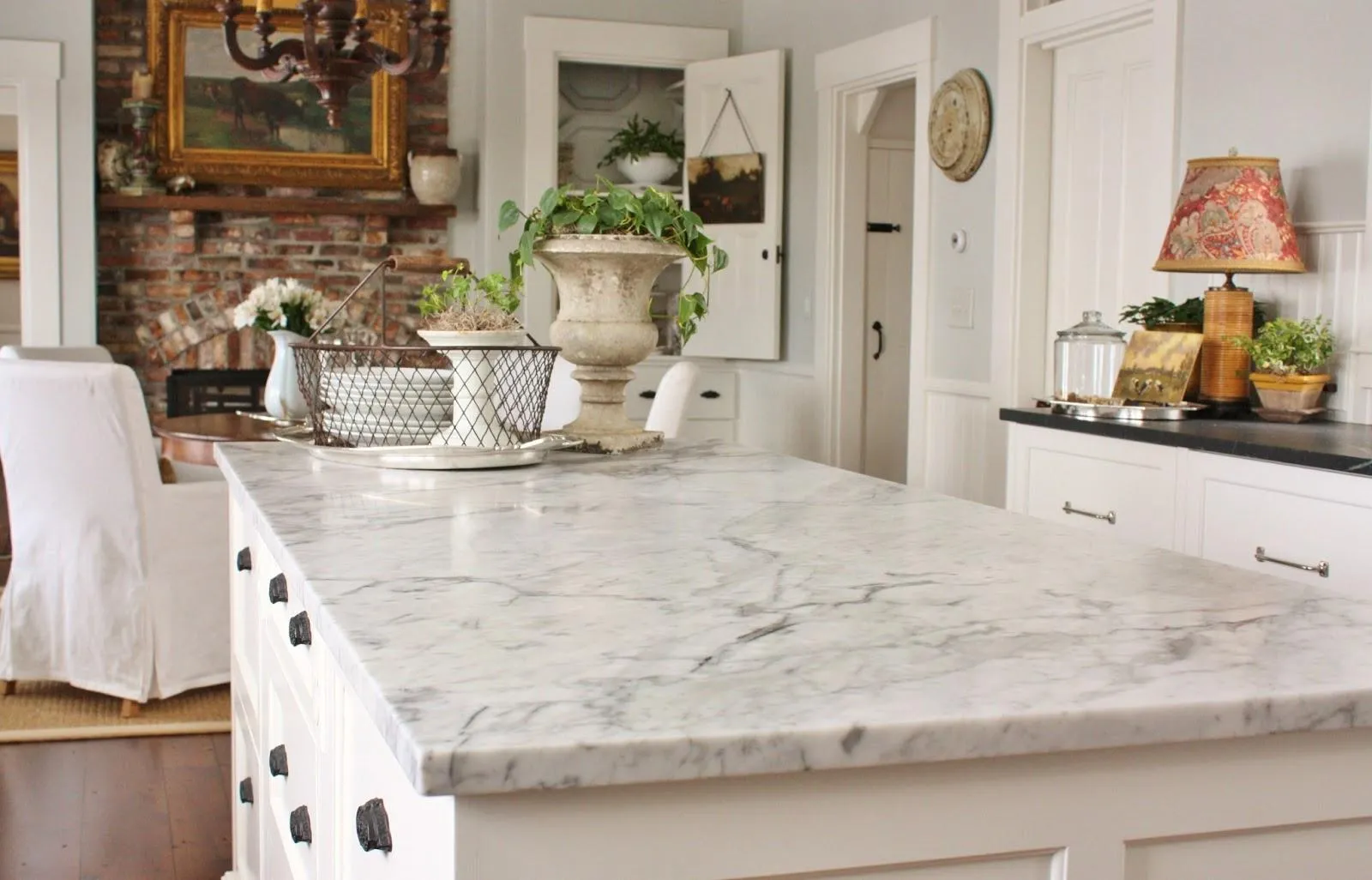
Marble flooring brings an unmatched sense of elegance and sophistication to any kitchen. Its unique veining patterns add a touch of luxury, but it requires regular sealing to protect against etching and stains. Best suited for homeowners who value style and don’t mind a bit of upkeep.
3- Slate
Slate is a top pick for those who love rustic charm and natural textures. Its inherent slip resistance makes it a safe and functional choice for busy kitchens, especially in homes with children or elderly family members. It’s also one of the most affordable natural stone options.
4- Limestone
Limestone offers soft, neutral tones that complement traditional and farmhouse-style kitchens beautifully. Its surface is smooth and warm underfoot, creating a cozy ambiance. While slightly softer than granite, it still provides reliable performance with proper sealing.
5- Travertine
Known for its textured surface and earthy elegance, travertine adds warmth and depth to kitchen flooring. Its natural pores give it character, though they require filling and sealing to ensure durability. Ideal for Mediterranean or rustic-inspired kitchen designs.
6- Sandstone
Sandstone features earthy tones and a naturally grippy texture, offering both visual warmth and practical slip resistance. Its subtle variations in color make each floor unique, enhancing the organic feel of your space. A solid option for homeowners seeking a grounded, natural look.
Factors to Consider When Choosing Stone Flooring
Choosing the right stone for your kitchen floor isn’t just about appearance, it’s about finding the perfect match for your lifestyle and space. Below are the key factors to help you make a confident, well-informed decision.
Important Factors to Consider:
- Durability: Select a stone that can handle heavy foot traffic, frequent spills, and the daily wear typical of a busy kitchen.
- Maintenance: Some stones require regular sealing and specific cleaning methods, while others are easier to care for over time.
- Slip Resistance: In a space prone to moisture and spills, it’s vital to choose a stone that offers a safe, slip-resistant surface.
- Aesthetic Compatibility: Consider how the stone’s texture, color, and finish align with your kitchen’s overall design and atmosphere.
- Budget: Natural stone prices vary widely—evaluate both upfront costs and long-term maintenance expenses when planning.
Pros and Cons of Stone Kitchen Floors
Before committing to a stone floor, it’s important to evaluate both its advantages and potential drawbacks. While stone is a premium choice admired for its beauty and longevity, it may not be the perfect fit for every household. Here’s a breakdown to help you decide whether stone aligns with your kitchen goals and lifestyle.
Pros of Stone Kitchen Floors:
- Long-lasting and Durable: Natural stone is built to last for decades, even in high-traffic kitchen areas, making it a smart long-term investment.
- Timeless and Versatile Design: From sleek modern kitchens to rustic farmhouse styles, stone flooring adapts to a wide range of aesthetics without going out of style.
- Natural and Eco-Friendly Material: Stone is a sustainable flooring option sourced directly from nature, offering an environmentally conscious solution without synthetic components.
Cons of Stone Kitchen Floors:
- Can Be Cold Underfoot Without Heating: Stone naturally stays cool, which can be uncomfortable in colder climates unless paired with underfloor heating.
- Requires Regular Sealing and Maintenance: To preserve its appearance and prevent stains or moisture damage, most types of stone need periodic sealing and care.
- Can Be Expensive to Install: Due to material costs and the need for professional installation, stone flooring often comes with a higher upfront price tag.
Maintenance Tips for Stone Kitchen Floors
Maintaining the natural of your stone kitchen floor doesn’t have to be difficult—just consistent. With the right care routine, you can protect your investment and keep your floor looking stunning for years to come.
Essential Stone Floor Maintenance Tips:
- Stick to Regular Cleaning: Sweep daily to remove debris and use a damp mop with a pH-neutral cleaner to avoid damaging the stone’s surface.
- Don’t Skip the Sealer: Sealing your stone floor periodically is key to preventing water penetration, stains, and long-term surface deterioration.
- Handle Spills and Scratches Promptly: Wipe up spills immediately to avoid discoloration, and use stone-safe products to gently buff out minor surface scratches.
Need Expert Help Choosing or Maintaining Stone Flooring? At Emporium Stone, we not only provide high-quality kitchen stone benchtops in Melbourne, but we also guide you through every step—from selection to care.
Stone Flooring Design Ideas for Kitchens
Stone flooring isn’t just durable—it’s also incredibly versatile when it comes to design. Whether your kitchen leans modern, rustic, or somewhere in between, there are endless ways to style natural stone floors to reflect your taste and elevate your space.
Creative Design Ideas to Inspire Your Kitchen:
- Match Stone with Your Kitchen Style: Polished granite works beautifully in sleek, modern kitchens; tumbled limestone suits traditional spaces; while slate adds character to rustic farmhouse designs.
- Play with Tile Patterns: Add visual interest with patterns like herringbone for a touch of elegance, or go bold with checkerboard tiles to create a statement floor.
- Mix Materials for a Unique Finish: Pair stone flooring with wood cabinetry, exposed metal fixtures, or even glass accents to create a layered, designer-worthy aesthetic.
Choosing the Right Color and Pattern for Kitchen Countertops
Choosing the right color and pattern for your kitchen countertops can dramatically impact the mood, flow, and overall harmony of your space. It’s all about finding the perfect balance between aesthetics and functionality to reflect your style and enhance your kitchen’s design.
Color Selection: Setting the Tone of Your Kitchen
The color of your kitchen countertops plays a powerful role in shaping the atmosphere of the space. It can influence how large the kitchen feels, how much light it reflects, and even the mood it creates.
- Lighter Colors (e.g., white, cream): Create a clean, bright, and airy feel—perfect for opening up smaller kitchens and enhancing natural light.
- Darker Colors (e.g., deep blue, black): Introduce depth, richness, and elegance. These shades are ideal for larger kitchens or open layouts where dramatic accents can shine.
Pattern Selection: From Subtle to Striking
Patterns can bring life to countertops, whether you’re going for understated elegance or bold personality. Choosing the right pattern helps add visual interest and elevate the overall design.
- Natural Stones (Granite, Marble): Known for their organic veining and color variation, natural stones serve as a luxurious focal point that’s unique in every slab.
- Quartz Countertops: Offer a more uniform and consistent appearance. Available in solid tones or gentle patterns, quartz provides the look of stone with lower maintenance requirements.
Design Harmony: Creating a Cohesive Look
Countertops don’t exist in isolation—they should blend seamlessly with other elements of your kitchen. Ensuring harmony between surfaces and surrounding materials is key to a balanced design.
- Match your countertop’s color and pattern with your cabinetry, flooring, and appliances to avoid visual clashes.
- Aim for a well-thought-out palette that allows each element to complement the others while letting your stone surface stand out appropriately.
Timelessness vs. Trends: Think Today and Tomorrow
While trendy colors and patterns can feel exciting, it’s important to balance short-term style with long-term appeal. A timeless choice often holds more value—both personally and in resale.
- Stick to classic shades (like white, beige, or soft grays) for longevity and universal appeal.
- Add bold colors or standout patterns in accent features like the kitchen island or backsplash for flexible flair.
- Always consider how your choice will age over time, especially if you plan to sell your home in the future.
Choosing the right stone flooring for your kitchen is a balance between style, function, and long-term value. From understanding the types of stone to learning how to care for them, each decision should align with your lifestyle and design vision. Whether you’re drawn to timeless marble or rustic slate, your choice should reflect both beauty and practicality. Contact Emporium Stone today or consult with our experts to explore tailored solutions that bring your dream kitchen to life.